I remember
going to a real Egyptian wedding in Australia when I was in my early
teens. It was the only one that stands
out in my memory for several reasons but one of them was that I got to go
to the reception and sit on a table with other young people and it was also the
time that I first came across pita chips made this way. I remember it distinctly because I couldn't stop
eating them and they were only the entrée!!!
They were presented on a platter with baba ghanoush dip and hummus and
probably some others I don't recall now.
Almost every day as a teen when I came home after school I would have the munchies and my favourite food was flat bread (which is known by many names, such as Pita chips, flat bread, aysh balady, Bread خبز, pita bread, Khubz, khoubz or khobz) that I
would butter and then grill until crunchy.
Sometimes I would add a slice of cheese and savor its melted stretchy goodness once it was cooked. I always thought this was the way
to make bread crunchy (either grilled or baked in the oven) but at this wedding, oh, I
was in heaven. (Yes, I dare say that I didn't
have a huge interest in much as a teen if one of my greatest joys was crunchy
buttered bread!).
Those pita
chips (as I call them now) at that wedding were perfect.
Lightly browned and salted and super crunchy and I never replicated this at home (didn't know
how) until this year when I happened to be planning the menu for a new cooking class. I wanted something different from what I
had done before since I knew that I would have people coming who had already
completed my 6 week course. As I
was thinking back to what I enjoyed eating the memory of these pita chips jumped into my mind. Straight away I thought yes,
I have to start with that!
It was only
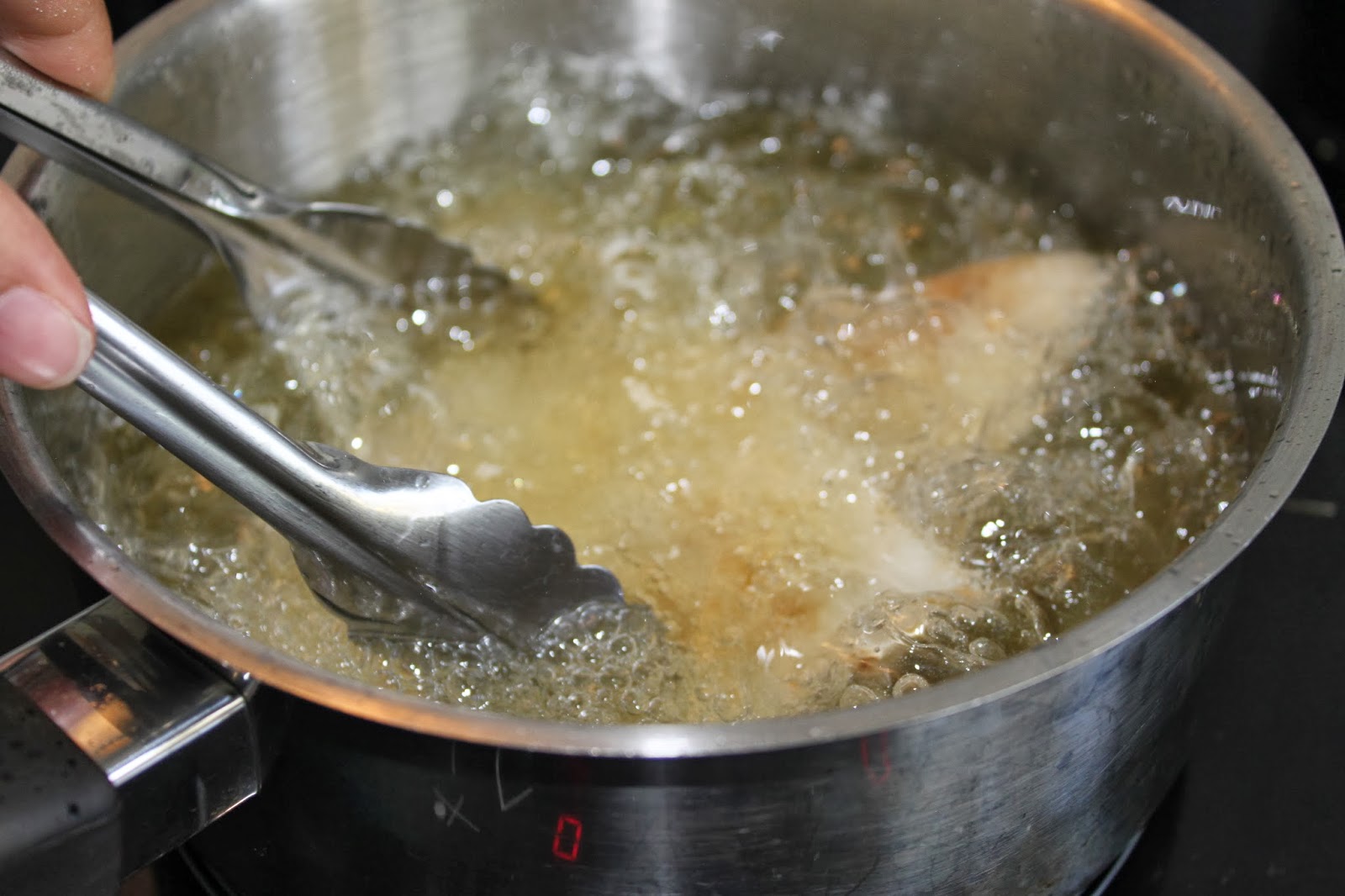
then that it occurred to me that the bread must have been fried! All through my teens I had tried to replicate the bread at the wedding with the oven or grill. So, naturally I took
aysh balady from the freezer, thawed it out and tested my theory. I can’t tell you how excited I was when I saw
the bread turn the perfect colour and contort in various shapes as it dried in
the hot oil. I seasoned it lightly with
sea salt flakes and then… CRUNCH…mmmmmm delicious.
They are the simplest thing really but gee I love them.
I sat with the boys and had the bread with some home made Tzatziki سلطة زبادى (Salatat Zabadi) - you can watch the video at:
So we made
pita Chips with a couple of dips at the cooking class and as I suspected they were a
big hit so next time you are feeling peckish or want a really great accompaniment
to dips for a party platter then give these a go, you wont be disappointed!
You could also try making them with some melted cheese or some herbs sprinkled over them.
To watch the video click the picture below or follow the link to YouTube on:
I hadn't made Ros bil Laban (Rice pudding) ارز باللبن for ages and one morning decided the boys might like it for breakfast so I set about making it and took a video of it in the process. Here it is for your viewing pleasure, just click on the image below.
My memories
of Ros bil Laban (Rice pudding) ارز باللبن are vague but I do remember mum in the kitchen making it and every
time there would be 6 bowls of it sitting on the bench. I feel like there was always too much,
probably because I was the one who ended up consuming 5 of the 6 bowls, and no,
they were not consumed in the one sitting.
But still, over several days it does add up so I don’t think I requested
rice pudding often but in winter I am sure it was featured once or twice. The other thing about rice pudding is that
since we didn't have dessert as such at home (mainly fresh fruit chopped up in
summer and nuts or the like in winter) this was the closest thing to dessert
for me. A bowl of creamy rice pudding
with my favourite flavour - vanilla!
Ros bil Laban (Rice pudding) ارز باللبن
It does
take time to make a creamy rice pudding from scratch, kind of like making a risotto
where you stand at the stove and stir for 20 to 30 minutes until all the liquid
has been absorbed. A creamy rice pudding
takes the same love and commitment. Stir
in a big dollop of butter, a generous amount of sugar and drizzle in vanilla
essence. You could of course use vanilla
from a vanilla bean and scrape out the seeds and throw in the pod while it is
cooking (heavenly) however it may prove to be too costly if you made rice
pudding a regular winter dessert.
Ros bil Laban (Rice pudding) ارز باللبن ingredients
Alternatively,
for those so inclined you could omit the vanilla and add in a few drops of your
favourite flavour such as cinnamon, coconut essence, almond essence or something like
that. Hmmm, I never really went for
anything other than vanilla but coconut or almond sound appealing to me right now.
(mental
note to self : try adding another flavour to rice pudding next time )
Ros bil Laban (Rice pudding) ارز باللبن
Rice
pudding is of course nice just like that but for a bit of texture and colour
add some chopped nuts, such as almonds or walnuts, or sultanas as a
garnish. Then curl up with your bowl of
rice pudding in front of the television with a blanket over your knees and
watch your favourite movie…for the ultimate in a relaxing night in.
Ros bil Laban (Rice pudding) ارز باللبن
Recipe
This
is the old fashioned type of rice pudding where you cook the rice with the
milk, rather than add pre-cooked rice to milk.
The result is a hearty, creamy dish.
We used to eat it at home for breakfast, or as a snack. Extra pudding can be place in bowls, covered
and kept in the fridge, just warm in the microwave with a little extra milk
before serving with chopped nuts, sultanas or cinnamon.
Serves: 4
4
cups / 1 L milk, plus 100ml extra, if required
175g
/ ¾ cup short grain white rice
65g
/ ¼ cup white sugar, or as desired
40
g butter
½
teaspoon vanilla extract
Cinnamon,
sugar, sultanas or chopped almonds to garnish.
Bring
milk just to the boil in a heavy based saucepan over medium heat. Add rice and reduce heat so that it cooks
uncovered at a simmer for 30-35 minutes, or until rice is tender. Stir the rice occasionally as the rice and
milk can burn. Stirring also stops a “skin” from forming on the surface.
Add
sugar and stir well. Add extra milk or
water if all liquid is absorbed and rice is still not cooked. Once cooked and creamy, take it off the heat
and stir in the butter and vanilla.
Transfer to serving bowls and sprinkle with cinnamon and extra sugar or
top with sultanas and chopped almonds, if desired.
Considering that over the last few months I have lived a sheltered life and barely stopped to notice the weather let alone follow current affairs or even family affairs for that matter, it was quite an achievement to go out for a family barbecue yesterday. But even more so because I made not just one sweet to take - but two! On top of that I even managed to make a video of the them!!!
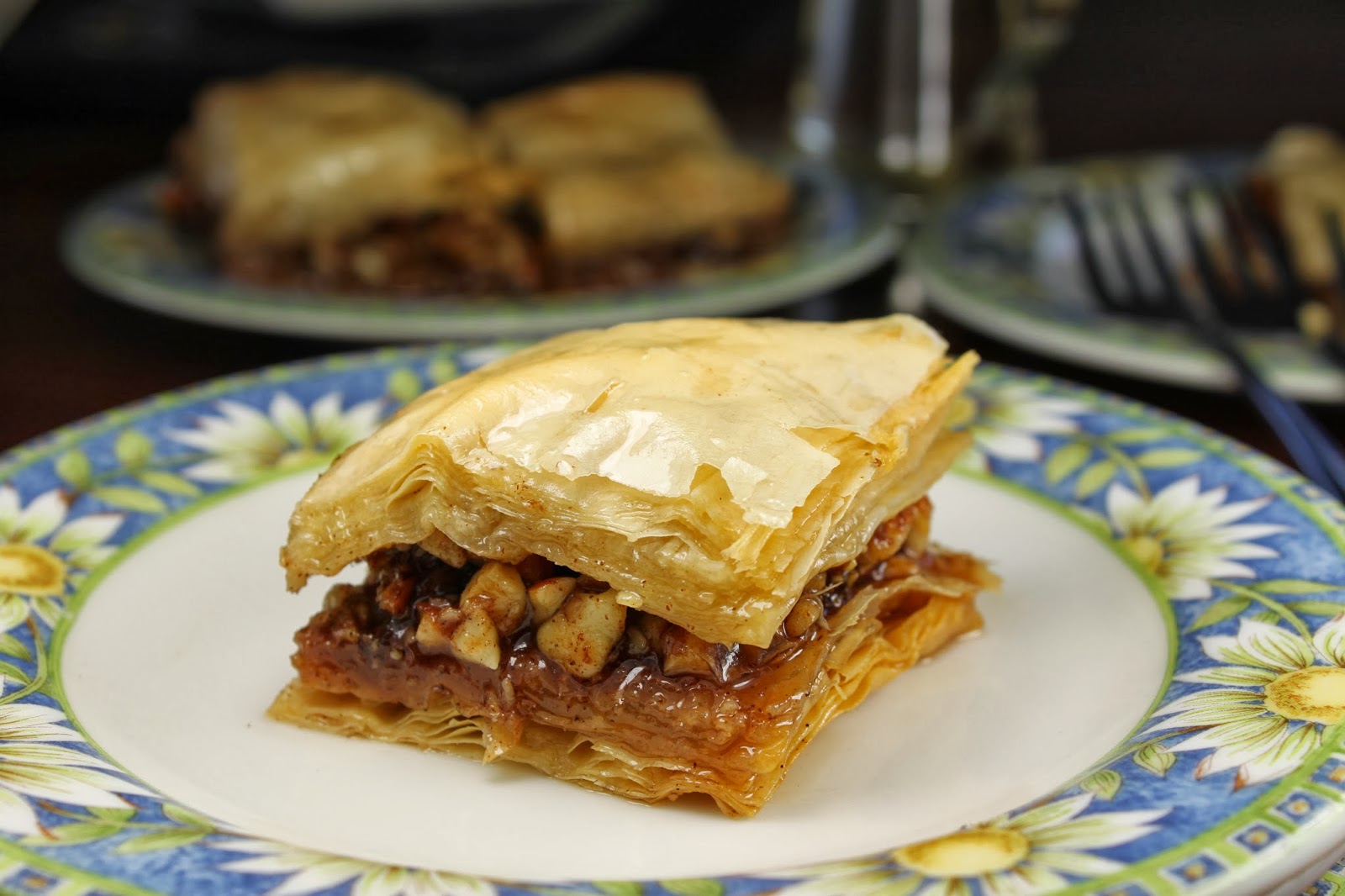
Baklava with vanilla syrup (Baklawa بقلاوة)
Well, there are no more daily trips to the hospital and no more sick kids to nurture through the day and night so even though I am seriously sleep deprived (my gorgeous bundle wakes me every hour and a half all night, most nights) I feel excited to have made a video. The first for a while and it was the video I had intended to make the day I went to hospital for some monitoring of the baby and ended up having an emergency caesarean and was out of action for over a month. That video was for Baklava with vanilla syrup (Baklawa بقلاوة)
Check it out here:
Baklava (Baklawa بقلاوة ) is quite a well known Mediterranean sweet and can be found in Turkish, Lebanese and Greek restaurants but it has also become more mainstream in the last few years and available in many places. While there are many ways to flavour Baklava with the use of vanilla, rose water and orange blossom water, the syrup may also be made with honey which adds a very distinct flavour also. At home my mum made Baklava with vanilla and I too use vanilla whenever I make this dish, but then I absolutely love the flavour and aroma of vanilla so I cannot go past it for a flavouring in deserts or sweets. I personally find rose water too strong in many versions of Baklava so I stick with the vanilla. If you were to use rose or orange blossom water be sure to add a little to the syrup at a time and taste it as you go because it is always easier to add more than it is to try and tone down an overpowering flavour. Start with a teaspoon at a time would be my suggestion.
Baklava with vanilla syrup (Baklawa بقلاوة)
Anyway, back to the barbecue, I took the Baklava to lunch and considering it was family (who I would have thought would be over traditional Mediterranean sweets by now) I didn't expect a big response to my dish but I was pleasantly surprised. Not only was most of it gone by the time I bothered to look, my step mother (bless her heart) told me it was perfect!! Yay :)
So here it is, my perfect Baklava
Syrup:
2
cups/ 500g sugar
2
cups / 500ml water
½
lemon juiced
¼
teaspoon vanilla extract One quantity of syrup 2 cups / 225g pistachio, walnuts or
almonds, coarsely chopped
¼ cup sugar
1 teaspoon ground cinnamon,
½ teaspoon ground cloves,
375g / 1 packet Filo pastry at room temperature
250g ghee, melted (or unsalted butter if you really cant get hold of ghee, better still, buy the butter and watch my video of how to make Ghee and make some yourself . Check it out on YouTube here:
Make the syrup and leave to cool. Preheat oven to moderate 180°C (350°F/Gas
mark 4). Brush the base and sides of a
30 x 25 cm cake tin with melted butter.
In a bowl combine the chopped nuts, sugar, cinnamon and cloves
powder. Remove a single sheet of Filo pastry at a time, fold each sheet
in half and place in tray. Brush the top with butter and fold in edges to
fit. Repeat using half the packet of
filo pastry making sure to brush with butter on each sheet, overlap and fold
the sides where necessary. Sprinkle the
nut mixture over pastry and then continue to layer the pastry with the
remaining sheets. Pour remaining butter
over the top. Cut into diamond or square
shapes, making sure to cut right through to the base. Bake for 20 - 25 minutes or until the Baklava is puffed and lightly golden on top.
Remove Baklava from oven and pour the cooled syrup over the hot Baklava Leave to cool before cutting
along the diagonals again to remove from the tray.
Note : Cover remaining pastry with a
damp tea towel to keep from drying out. Baklava can be prepared days in advance, stored in the fridge
and baked on the day they are to be served.
They will also keep for several days after baking in a cool oven or air
tight container, but do not store in the fridge.
Well, firstly apologies for the inconsistent blog posts, this year has been very busy to say the least. As I am pregnant with baby number 3 it has been difficult to keep up with activities of daily life looking after 2 boys as well as maintain the blog, cooking videos and undertake the challenge of running cooking classes while being either vomiting from morning sickness or restricted due to illness etc.
While I have had to reduce the time spent on the various projects and neglected the blog while I was planning, preparing and running the cooking classes, with the remaining few weeks before this baby arrives I have put classes on hold and can devote more time to the videos and blog instead.
The cooking classes were very successful and I had wonderfully positive feedback from the participants so I do look forward to running some more in the future. In the mean time I have begun working on a video course that will be structured the same as for the Egyptian Cooking banquet course that I ran as a class. This will take me several weeks to complete with the aim of completing it and getting it uploaded to UDEMY before the baby arrives!! So keep an eye out for that. I will of course let you know as soon as it goes up.
I know that I promised a blog and video on Koshery some time back before I got a cold I couldn’t shake. It left me very fatigued and I just couldn’t manage it. I have not forgotten about it and do hope to get around to that soon.
As it is winter now, down here in the Southern Hemisphere, I often look forward to soup to warm our bodies and one very classic and tasty soup that I grew up with at home is a red lentil soup called عدس Aatz. Its combination of cumin and lemon are wonderful with the lentils. Lentils are not a particularly popular but I did make this during one of the cooking classes and found that while most people thought very little of this pulse before tasting the dish once it was served the oohs and aahs were flowing and there seemed to be almost a surprise to some that lentils could produce something that tasted nice.
My mums’ way of making this involved using a special strainer where you turn the handle and the soup gets pushed through tiny holes. I don’t have one and I did try pushing the soup through a strainer using a spoon but soon realised that was a huge effort and messy too. Instead my way was to blend the soup using a stick blender which I love since it produces a wonderfully smooth soup. The same result with half the fuss.
Lentil soup عدس Aatz
Serves 6
Lentil soup عدس Aatz
1 ½ cups / 300g red lentils
1 - 1½ litres chicken stock (depending on the consistency desired)
1 tablespoon ghee or butter
1 medium onion, chopped
½ teaspoon salt (if using stock taste before adding salt)
2 teaspoons cumin powder, or to taste
2 tablespoons lemon juice, or to taste
To save on dishes I fry the onion in the same pot as I will cook the lentils in. Melt the ghee or butter in the pot and add the chopped onion. Fry on medium heat for 5 minutes or until browned. In the meantime wash the lentils and strain. When the onion is cooked remove onto a plate and add the lentils and water to the pot. Bring it to the boil then reduce heat, cover and simmer for 30 minutes until cooked. My parents put the soup through a hand strainer at home but I think it is far easier to use a stick blender and wiz it up until smooth. Add cumin powder and lemon juice. Check for seasoning before adding salt. Mix well then serve with the fried onion on top.
This can be served in a bowl as a soup with fresh Lebanese bread on the side for dipping, or several loaves of Lebanese bread can be dried, broken into small pieces and mixed with the soup. To do this split the bread into halves, place in preheated moderately hot oven 200°C (400°F/Gas mark 6) for 10 -15 minutes or until bread is dry and lightly browned. Break into small pieces in a large bowl and add the lentil soup over the top. Mix and serve.
I was looking through the massive amount of cooking footage I still have on the computer and discovered a gem. While our second child was still a baby and not a toddler I made Meatballs in tomato sauce كفتة بالدمعة Kofta bil dema-a.
I have always enjoyed eating good tasting meatballs and Kofta كفتة is basically an Egyptian meatball. Kofta can be made so many different ways and it can be fried, or barbecued or cooked in a tomato based sauce and left to simmer away absorbing flavours on the stove (or this can be done in a slow cooker).
The key, as with any type of meatball, is to make sure they are browned first as this seals the meatballs and stops them from falling apart in the cooking process.
When I went back and watched the footage I got to reminisce and enjoy those memories from when the kids where so little. I think this must be one of my favourites, if not my favourite video. Take a look and let me know what you think...oh, and the food too!
We always had Meatballs in tomato sauce كفتة بالدمعة Kofta bil dema-a with rice but I know that many people eat meatballs with pasta. These could easily be eaten served over pasta if you like. But at home it was rice. I love the rice soaking up the sauce and I often used to mush up the meatballs and stir it all together through the rice. I do that for the kids and they love it.
As with most things feta cheese, olive and a green salad at the table and it is a complete meal. Love to have your feedback so let me know how you go making this.
Kofta Barbecued
Fried Kofta
Meatballs in tomato sauce كفتة بالدمعة Kofta bil dema-a
Book 2 in the Egyptian Cooking series is now available from Lulu. Click the Book shop tab at the top to link straight through. The book is only $1.95 and I would love your feedback as always.
Well, the series of cooking classes came to an end last night. I had a great time cooking and getting to know the ladies of the class. The classes were interactive and fun with the ladies getting involved which was great. I hope that future classes will run as well and I look forward to even more Egyptian dishes becoming widely known. I think that dips are fairly well known with a large number of dips being available in supermarkets and delicatessens. Most of them are very easy to prepare at home and can be adjusted to suit your own tastes.
The dip Hummus bi Tahina حمص بالطحينة (Hommus dip) is great because it uses chickpeas which are a great source of calcium and vitamins E and B. Serve it with fresh bread or crackers, batons of fresh vegetables or even use it as a spread for sandwiches. This is quick to make and healthy too, what's not to like about that!
I have updated the Egyptian cooking videos so now you can click through to more videos through the menu at the top of the page. The Hummus bi Tahina حمص بالطحينة (Hommus dip) is there too.
Put
chickpeas in a bowl and cover with cold water and leave overnight.
Drain
chickpeas, place in a saucepan and cover with fresh water. Bring to the boil and cook on high heat for
10 minutes. Reduce heat and simmer for 2
hours or until soft. Drain. Alternatively canned chickpeas can be used
instead of dried. Use 400 g and drain
well.
Place
chickpeas in a food processor and blend to a smooth consistency. Add lemon juice, garlic, olive oil and tahini
and blend until smooth. Taste and season as required.
Transfer
to a bowl, garnish with paprika.
To watch the video click through below or jump onto Dyna's Egyptian cooking on YouTube.
I plan to have my first Egyptian Cooking eBook up this week, so keep an eye out for that!
In the meantime, we had a kinder interview this morning for my son who will be in 4 year old kinder this year. Very exciting. We spent some time meeting the teacher that will be the biggest influence on our son outside of the home and getting the paper work out of the way. We were then shown the ins and outs - literally, where we come in and go out etc. And then as if in a wink we were finished. Armed with the knowledge we needed for the smooth transition into the first week of kinder. The kids were content and since we were already out and about and it was just on 9 am I thought we would head to the market.
I was actually trying to source figs since I have used up all the fig jam I made last year (I really do think it is the best thing on fresh bread with butter). I had fig jam on toast this morning and have enough left for about two more slices. That’s it. Being so critically low was my motivation for finding figs in a quantity and price that was conducive of producing enough fig jam for the following year. I found them in several places including the supermarket and they ranged in price from $10 to $25 per KG.
Since I had dragged the kids around for an hour or so I thought it was time for them to have a play and enjoy getting their faces painted (well one had his hand painted instead) but we enjoyed looking and buying bits and pieces. On our hunt for figs I noticed a man moving a box of prickly pears from one location to another. Wow, I feel like I haven’t had them for ages! My eldest asked me what they were, wanted to pick them up by hand (to my horror) and asked me if he could eat one. I thought there was no better time than now to get them and whilst I get to enjoy them once again he can hopefully get more educated where prickly pear is concerned. They are handled with tongs, carried carefully, peeled with gloves on and then finally they are edible.
Prickly pear تين شوكى Teen Shawky
I bought 4 and thought I would see how the boys find them to eat. With all those seeds I realize they may not appeal to everyone but I think that they are still worth trying – at least once. When we got home again I was barraged with questions regarding the prickly pears. He settled on waiting to have them for dessert tonight so it leaves me with enough time to get them prepared. I thought I would make a video of how to peel them for anyone who has not seen them before and who would like to know what to do with them (I often feel like that, particularly with some Asian fruit or vegetables which I come across and am unaccustomed to). With the difficulty in preparing the fruit I think I will wait until hubby gets home from work to help me get the video together but that will be available to view shortly.
Prickly pear تين شوكى Teen Shawky
My dad grew a cactus in the backyard when we were growing up. It was tucked away in the far back corner of the backyard so there were never any mishaps where the tree was concerned. Being a cactus there must be precautions as I can imagine how painful it would be for a child to get pushed or fall on it. Probably hours sitting and crying while the thorns are removed. I can’t remember seeing it, perhaps he got rid of it before the onslaught of grandchildren came along. I must remember to ask him if he still has it hidden away in the corner and if so I will make a mental note not to tell the kids about it since it will inevitably act like a magnet, drawing them to it inexorably only to end in tears when they get prickled!
My mum was always the one to get the prickly pears out of their spiky shells. When the cactus wasn’t productive my parents would buy some at the market and mum would stand at the kitchen with gloves on, carefully removing the fruit and setting them aside. I think she and I were the ones who really liked eating them. I feel the baton has passed to me, to buy, peel and set a plate of prickly pears in front of my family for their enjoyment. I only hope they do but at least I get to reflect on the memories of home and taste the fruit once again.
Prickly pear تين شوكى Teen Shawky
Prickly pear تين شوكى Teen Shawky
Prickly pear تين شوكى Teen Shawky
So while today was not the day for fig jam (although this is something I can look forward to for another day) and I had the special surprise of coming across the prickly pear. So all in all not a bad outcome.
Prickly pear تين شوكى Teen Shawky
As a side note, when prickly pear was first introduced into Australia it became a serious invasive pest, growing out of control across huge tracts of land. In the early 20th century the decision was made to introduce a moth - Cactoblastis cactorum - seriously, what an awesome name for an insect – in an attempt to control the prickly pear as its larvae eat the plant. Thankfully the introduction of the moth worked wonders with prickly pear being virtually wiped out and the moth not affecting other local plants or animals (at least as far as I know, but happy to stand corrected). Sadly attempts to use the moth in a similar manner in other parts of the world have not worked so well with the moth now an invasive species and with its range growing each year. It was such a big event in Australia though that there is even a memorial erected to the introduction of the moth in Dalby, Queensland!
I caught up with some
friends yesterday morning, one of whom is pregnant. I love to find out how other people
experience their pregnancies and births partly because there is so much that
differs between women and even with the one woman’s experiences with multiple
pregnancies. The other part is because
human development (and with all animals) is an incredibly amazing process that
I can’t help but be enthralled by it.
Anyway back to my pregnant friend.
We were talking about what if any cravings she is having and I was shocked
when she said that actually she wanted to know how to make Ful. She is not Egyptian but has been to Egypt and
loved it there so that explains her exposure to this dish. I thought it was wonderful she has been
craving this dish as it is not one that I would have thought of to post. I did however promise that this would be my
next blog.
So, about Ful Medames, Slow cooked broad beans, فول مدمس
This
is THE national dish in Egypt. A
delightfully tasty dish that is suitable for vegetarians and vegans. Ful is the Egyptian word for Broad
beans (also known as Fava beans), and medames is a word meaning
"buried." It refers to the original cooking method, which involved
burying a sealed pot of water and beans under hot coals.
My parents use a
special metal pot specifically for cooking Ful , (pictured below) and it was filled with the pre -soaked dried beans, covered with water and left to cook over the lowest heat for 6 or 7 hours. However you could use a normal pot or simply buy canned
Broad beans.
Ful can be made in advance and can be cooked, cooled
then refrigerated for several days or frozen for several months. Thaw out in the fridge overnight. Then heat and add the remaining ingredients.
This dish takes me back to
Saturday morning breakfasts when my dad would get up early and get fresh bread
then make a huge spread of Ful medames, Tameya (falafel), boiled eggs,
with feta, pickles, olives, chopped tomatoes and other salad items at the
table. I think about this now and how
difficult it is to get up and arrange such a hearty breakfast for my own family
(although we have been known to have it for dinner).
Dried fava or broad beans are
typically used. Leave the beans covered
in water to soak overnight. Then drain, add fresh water and boil in a saucepan
until lovely and tender which may take several hours. On the other hand the beans could be boiled
in a pressure cooker to reduce the cooking time to 30 or 45minutes although be
aware that the beans may break down using this method so it is not ideal. When cooked drain and remove the flesh from
the skin. Alternatively, the skins can be left on and mashed with a fork or as
I prefer to do simply blend it all together with a stick blender and then add
the remaining ingredients.
Serves 2
¾ can/ 325g or 1 cup
cooked broad beans
1 clove garlic, crushed
2 tablespoons extra virgin
olive oil
½ - 1 lemon, juiced
1 teaspoon salt
Pinch pepper
1 teaspoon cumin, or to
taste
Remove the broad bean
flesh from the skins and mash or puree the flesh with a fork. Alternatively puree the beans and skins
together for a smooth consistency. And
add the oil, garlic, cumin and lemon juice.
Season with salt and pepper and taste to check that for the balance of
flavours, adjusting if necessary.
Slow cooked broad beans فول مدمس Ful Medames
For a heartier Ful
medames you can add ½ a tomato, ½ small onion and ½ small Lebanese cucumber
which are all very finely diced. A
boiled egg can also be added and mashed into the beans along with some feta
cheese. If adding these, check the
flavour and add more garlic, oil, lemon juice, cumin or salt as required. Serve with fresh Lebanese bread (By hand, break off some bread and form a scoop by pinching in two edges. Then use it as a spoon to scoop up the cooked broad beans فول مدمس Ful Medames!